

Locations
Carmel Valley Countertops & Stone Slabs – San Diego
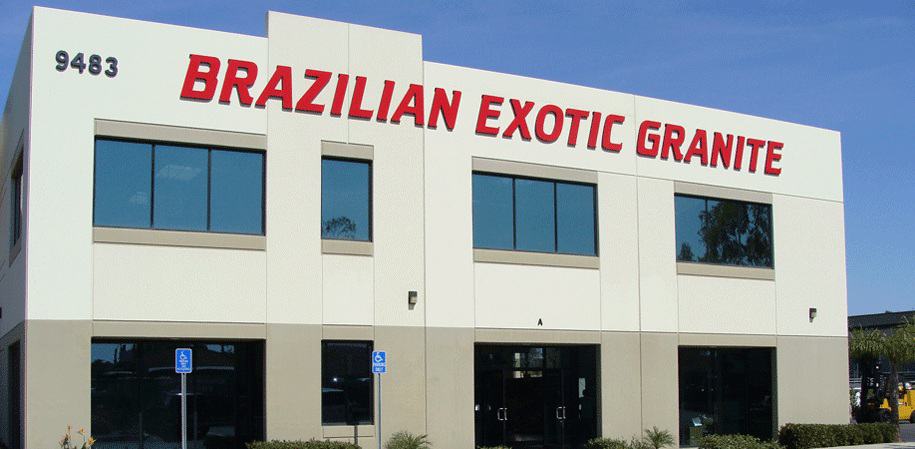
Choosing a countertop starts with finding the right material and, with natural stone, the right individual slab. Carmel Valley homeowners are roughly 15 minutes from Brazilian Exotic Granite’s San Diego slab yard on Camino Ruiz, just off Miramar Road, where granite, quartzite, marble, soapstone, limestone, onyx and translucent stone are stocked in full slabs, along with prefabricated countertops.
Each material offers a different combination of color, movement, durability, maintenance, and cost. Many Carmel Valley kitchens are now reaching the point where the original builder-grade countertop is due for replacement, and the open great-room plans typical of the area mean the new surface will be visible from most of the ground floor — worth choosing in front of the actual slab rather than from a sample board.
Stone Countertop Options for Carmel Valley Homes
Carmel Valley, Pacific Highlands Ranch, Torrey Hills, and Del Mar Mesa are largely master-planned neighborhoods built from the late 1980s through the 2010s. Kitchens tend to be large, open to a family room, and centered on a substantial island — which gives a countertop room to make an impression, and makes a dated one hard to ignore.
Granite
Granite is a hard, heat-resistant igneous stone available in an enormous range of colors and patterns. It is worth noting that the speckled beige and gold granites installed across the neighborhood in the 1990s and 2000s are only a narrow slice of what granite actually offers — the current inventory runs from quiet near-solids to dramatic exotic slabs with heavy veining and movement.
Quartzite
Quartzite is a natural metamorphic stone, harder than granite, that often reads like marble — white and grey backgrounds with soft veining — while performing more like granite in a working kitchen. For homeowners updating a dark 2000s kitchen toward something lighter, quartzite is the most common answer.
Marble
Marble gives a classic, luminous surface. It is softer than granite or quartzite and will etch where acidic liquids sit on it, so in a busy family kitchen it is usually reserved for a baking station, a butler’s pantry, or the primary bath rather than the main cooking perimeter.
Soapstone
Soapstone is a dense, non-porous stone with a soft, matte, deep-grey character that darkens with oiling. It needs no sealing and is unaffected by acids, and it offers a way to break up an all-light kitchen with a contrasting island or wet bar.
Limestone
Limestone offers a quiet, sedimentary look in warm neutral tones. It is softer and more porous than granite, so it is generally specified for bathrooms, powder rooms, and low-traffic surfaces rather than a hard-working kitchen perimeter.
Onyx and Translucent Stone
Onyx and other translucent stone can be backlit so the slab itself becomes a light source. In Carmel Valley these are most often used for bar fronts, powder-room vanities, and feature panels rather than primary kitchen counters.
Prefabricated Countertops
Prefabricated countertops arrive in standard sizes with an edge already finished. Selection is narrower than full slabs, but the format shortens the timeline and suits laundry rooms, guest baths, and rental units where the schedule matters more than a one-of-a-kind piece.
Why Visit a Slab Yard Before Choosing a Countertop?
Natural stone is not a manufactured product. Two slabs cut from the same block can differ noticeably, and no sample chip communicates how veining will run across a nine-foot island. Seeing full slabs standing under natural light answers questions a photograph cannot:
- How the pattern actually scales across a large surface
- Whether the background tone reads warm or cool against your cabinetry
- Where the movement falls, and how it can be laid out on your island
- Whether two slabs can be bookmatched into a mirrored pair
- How a polished, honed, or leathered finish changes the same stone
Choosing the Right Stone for a Carmel Valley Kitchen
Most kitchens in the area share a similar problem: a large island in an open plan, visible from the family room and often from the entry. That argues for treating the island as the design decision and letting the perimeter support it — a stone with real movement on the island, something quieter around the edges, or a single consistent material if the goal is calm. Durability then narrows the field, and for households with children and daily cooking, granite and quartzite are the practical choices. Finally, consider the existing cabinetry: much of the neighborhood’s original maple and cherry reads warm, and a stone with a cool grey background can fight it unless the cabinets are being refinished at the same time.
Natural Stone for Outdoor Countertops
Built-in barbecue islands and covered California rooms are common in Carmel Valley backyards, and the environment is demanding: sustained sun and real summer heat a few miles inland. Granite and quartzite are the two materials suited to it. Both hold their color under UV exposure and tolerate heat and temperature swings far better than engineered surfaces, which can discolor or delaminate outdoors. Lighter colors stay more comfortable to the touch on a counter in full sun.
Stone Countertops for Carmel Valley Bathrooms
Bathrooms see far less heat, cutting, and acidic spill than kitchens, which widens the material list considerably. Marble and limestone are both realistic choices for a vanity, and a honed marble top gives a soft, matte surface that updates a builder-standard primary bath more effectively than almost any other single change. Onyx and translucent stone are worth considering for a powder room. Remnant and smaller slabs often cover a single vanity, which can make a higher-grade stone affordable in a bath than it would be across an entire kitchen.
Polished, Honed, and Textured Stone Finishes
The same slab can look like three different stones depending on how it is finished. A polished surface is reflective and deepens color, making veining and depth most visible. A honed surface is matte and softer, reads more contemporary, and hides water spots — though it can show fingerprints on dark stone. Leathered and other textured finishes add a subtle tactile grain and are a good middle ground for dark granites that would otherwise look glassy. Choosing the finish at the yard, with the slab in front of you, is far more reliable than choosing it from a specification sheet.
What Should You Look for When Selecting a Stone Slab?
- Whole-slab pattern. Look at the full piece, not a corner of it, and picture it on your island.
- Consistency across the lot. If your job needs two or three slabs, check that they came from the same block.
- Movement placement. Decide which section of the slab should land at the sink, the range, and any waterfall edge.
- Fissures and natural markings. These are normal in natural stone; ask which are structural and which are cosmetic.
- Thickness. Two- and three-centimeter slabs affect edge appearance and support requirements.
- Finish. Compare polished against honed or leathered on the same stone before deciding.
Full Slabs vs. Prefabricated Countertops
Full slabs give the widest selection, the ability to choose the exact piece your countertop is cut from, and the option to bookmatch. Prefabricated countertops come in fixed dimensions with a finished edge and move faster from selection to installation. For a Carmel Valley kitchen remodel, full slabs are almost always the right call; for a laundry room or a guest bath, prefabricated can be the sensible answer.
Does Brazilian Exotic Granite Fabricate and Install Countertops?
No. Brazilian Exotic Granite is a direct importer and slab supplier. Homeowners, designers, and contractors select their material at the yard, and the stone is fabricated and installed by a fabricator. If you do not already work with one, the team can refer you to fabricators who work regularly in Carmel Valley and the surrounding North City communities.
Why Carmel Valley Homeowners Visit the San Diego Slab Yard
The San Diego yard sits on Camino Ruiz just off Miramar Road — roughly 15 minutes from Carmel Valley by way of SR-56 to I-805, or Carmel Country Road and Carmel Mountain Road. It is the closest full slab yard to the neighborhood, which makes it practical to come back a second time with a cabinet door or a tile sample before committing. Because the stone is imported directly from the quarry, inventory depth is unusual for the region and pricing is wholesale to the public. A second yard in San Marcos carries additional inventory if you are heading north.
Visit the San Diego Slab Yard
Location & Contact
Brazilian Exotic Granite – San Diego
9483 Camino Ruiz
San Diego, CA 92126
Phone: (858) 264-2895
Email: info@begranite.com
Hours
Monday – Friday: 8:00 AM – 5:00 PM
Saturday: 9:00 AM – 5:00 PM
How To Find Us
The yard is on Camino Ruiz just off Miramar Road, about 15 minutes from Carmel Valley via SR-56 to I-805, or Carmel Country Road and Carmel Mountain Road.
Schedule an appointment to visit the slab yard, or call (858) 264-2895.
Walk among hundreds of live slabs and pick your piece. Schedule Your Visit or call (858) 264-2895.
Carmel Valley Countertop FAQs
What types of countertops are available for Carmel Valley homeowners?
Granite, quartzite, marble, soapstone, limestone, onyx and translucent stone, and prefabricated countertops are all available, in a range of colors, patterns, and price points.
Is there a Brazilian Exotic Granite showroom in Carmel Valley?
No. The nearest location is the San Diego slab yard at 9483 Camino Ruiz, just off Miramar Road, about 15 minutes from Carmel Valley. A second yard is located in San Marcos.
How far is the slab yard from Carmel Valley?
The San Diego yard is roughly 15 minutes via SR-56 to I-805, or Carmel Country Road and Carmel Mountain Road, depending on traffic and where in the neighborhood you are starting from.
Does Brazilian Exotic Granite sell directly to homeowners?
Yes. Brazilian Exotic Granite is a direct importer and sells straight to the public — no middleman between the quarry and your project. Homeowners are welcome to walk the yard, compare full slabs side by side, and tag the exact stone they want. Designers, fabricators, and contractors are welcome as well.
What is a good replacement for a 1990s speckled granite countertop?
Most homeowners updating that look move to quartzite or a lighter, quieter granite with softer veining. Seeing both at full slab size next to a cabinet door is the fastest way to decide.
Which countertop material is best for a kitchen?
Granite and quartzite are the most practical for a kitchen that gets daily use. Marble is beautiful but softer and will etch, so it suits homeowners who accept a patina or who use it in lower-wear areas.
Which natural stones can be used for outdoor countertops?
Granite and quartzite. Both hold their color under sustained sun and handle the heat of a built-in barbecue island or California room.
Is honed marble popular?
Yes. A honed finish gives marble a soft matte surface that reads contemporary, and it hides water spotting better than a polished finish.
Do I select the actual slab used for my countertops?
Yes. You choose the specific slab at the yard, and can decide how its movement should be laid out across your island and perimeter.
Does Brazilian Exotic Granite install countertops?
No. The company supplies slabs and can refer you to fabricators who work in Carmel Valley and the surrounding North City communities.
Are prefabricated countertops available?
Yes. Prefabricated countertops come in standard sizes with a finished edge and shorten the timeline, which suits laundry rooms, guest baths, and rentals.
Can translucent stone be used for countertops?
Yes, and it can be backlit. It is most often used for bar fronts, powder-room vanities, and feature panels rather than primary kitchen counters.